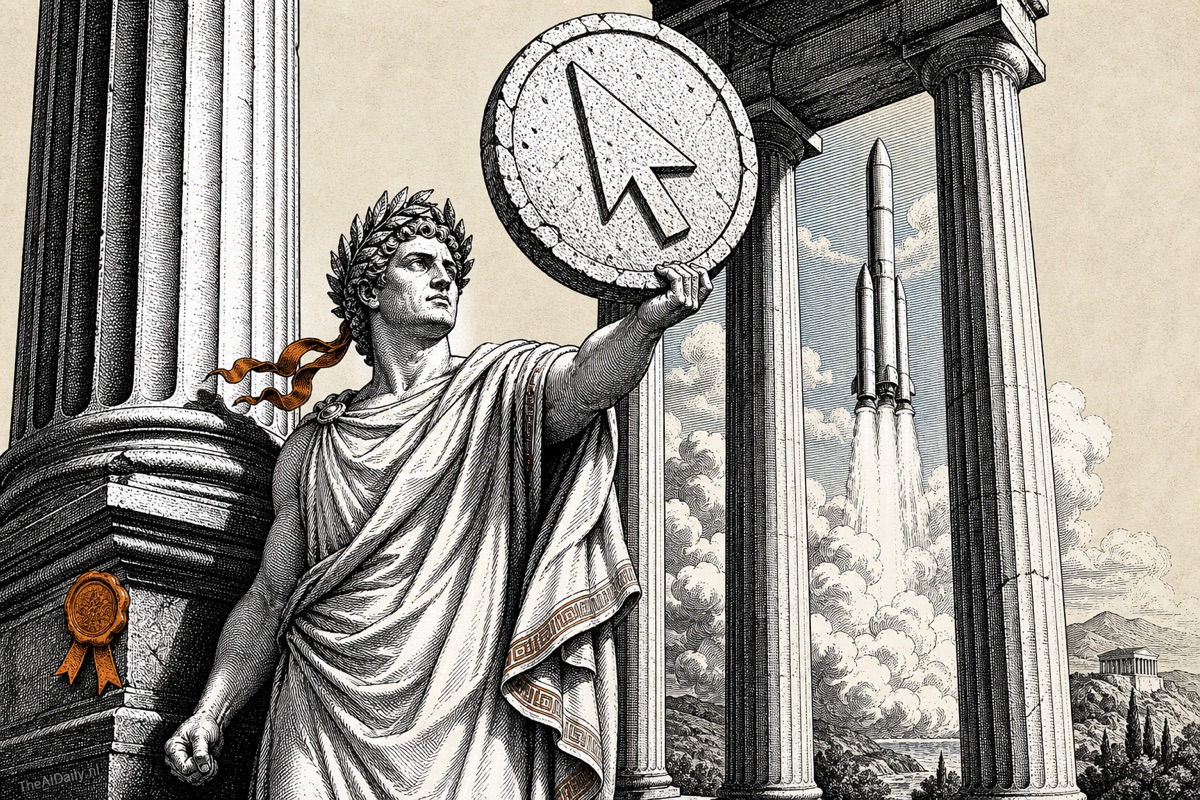
De snelst groeiende AI-editor ter wereld heeft een nieuwe eigenaar. SpaceX tekende gisteren voor de overname van Cursor, de AI-codeertool die vier miljoen developers elke dag gebruiken, in een deal van zestig miljard dollar. Vier dagen eerder was SpaceX zelf net naar de Nasdaq gegaan in de grootste techbeursgang van 2026. Wat je als gebruiker moet weten: Musks AI-lab xAI traint al maanden samen met Cursor aan een nieuw codemodel, en dat verschijnt binnenkort in je editor naast Claude en GPT.
Wat is er precies gebeurd?
SpaceX tekende op 16 juni 2026 een fusieovereenkomst met Anysphere, het moederbedrijf achter Cursor. Dat blijkt uit een SEC Form 8-K die dezelfde dag werd ingediend. De deal is volledig in aandelen: Anysphere-aandeelhouders krijgen SpaceX-aandelen ter waarde van zestig miljard dollar. Cursor was eerder gewaardeerd op negen miljard, een rendement van bijna zeven keer voor vroege investeerders.
De timing is opvallend. SpaceX ging vier dagen eerder naar de Nasdaq in wat TechCrunch de grootste techbeursgang van 2026 noemde, goed voor 75 miljard dollar aan opgehaald kapitaal. Met die verse beurskoers financiert SpaceX direct de grootste AI-softwaredeal van het jaar. De overname wordt naar verwachting in het derde kwartaal van 2026 afgerond.
Even voor de beeldvorming: Cursor groeide van honderd miljoen dollar jaaromzet begin 2025 naar 2,6 miljard dollar in juni 2026. Achttien maanden, zesentwintig keer de omzet. Vier miljoen actieve developers, van freelancers tot enterprise-teams bij banken en techbedrijven, openen het dagelijks.
Waarom wil SpaceX een code-editor?
SpaceX bouwt via deze overname een verticaal geïntegreerde AI-ontwikkeltool: eigen model, eigen rekenkracht, eigen editor. Die combinatie werd dit jaar mogelijk.
Sinds februari 2026 is xAI, het AI-bedrijf achter chatbot Grok, volledig opgegaan in SpaceX. Die fusie waardeerde xAI op 250 miljard dollar en werd op 6 mei definitief afgerond. SpaceX heeft daarmee niet alleen raketten en satellieten, maar ook een van de grootste AI-supercomputers ter wereld: het Colossus-cluster in Memphis.
Volgens Techzine kampte Cursor eerder met een tekort aan rekenkracht om eigen modellen te trainen. Via SpaceX en Colossus verdwijnt dat probleem. De twee partijen trainen al maanden samen aan een codemodel dat binnenkort beschikbaar moet worden in zowel Cursor als Grok Build, de eigen developer-tool van xAI.
Denk aan een fietsenmerk dat een profploeg overneemt en direct een eigen windtunnel meelevert. Cursor had de software en vier miljoen gebruikers. SpaceX had de rekenkracht en het kapitaal. De combinatie levert een AI-codeerfabriek op die concurrenten niet zomaar kunnen nabouwen.
Wat verandert er voor jou als Cursor-gebruiker?
Op dit moment niets concreets. Cursor blijft een zelfstandige dochteronderneming en er zijn geen wijzigingen aangekondigd in modeltoegang, functies of prijzen. Je kunt nog steeds werken met Claude, GPT, Gemini en lokale modellen. Maar er zijn drie ontwikkelingen om in de gaten te houden.
Modeltoegang kan verschuiven. SpaceX heeft datacontracten met Anthropic en Google ter waarde van 26 miljard dollar per jaar, elk met een opzegtermijn van negentig dagen. Die deals kunnen relatief snel worden bijgestuurd. Als SpaceX besluit om Grok-modellen voorrang te geven in Cursor, hoeft het alleen die opzegtermijn af te wachten. Tegelijkertijd verschijnt het gezamenlijk getrainde codemodel naast de bestaande opties. Meer keuze, dus, tenzij er later wordt geschrapt.
Je data krijgt een nieuwe eigenaar. Als je met Cursor werkt, gaat je code door de servers van Anysphere. Na de overname is SpaceX verantwoordelijk voor die data. Voor Nederlandse bedrijven die onder de AVG vallen, is het verstandig om de verwerkersovereenkomst opnieuw te bekijken zodra de deal is afgerond. In een eerder artikel bespraken we de zeven vragen die je moet stellen over bedrijfsdata in AI-tools.
De doorontwikkeling kan vertragen. Grote overnames leiden vaak tot extra integratiewerk. Cursor bracht de afgelopen maanden in hoog tempo updates uit, waaronder Bugbot dat je code nu in negentig seconden controleert. Of dat tempo na de overname standhoudt, is afwachten.
Hoeveel kost Cursor nu en gaat de prijs omhoog?
Cursor Pro kost twintig dollar per maand, omgerekend circa 22,50 euro inclusief btw voor een Nederlandse gebruiker. Het Business-plan staat op veertig dollar per gebruiker per maand, ongeveer 45 euro inclusief btw.
| Plan | Prijs (USD) | Circa EUR incl btw | Opvallendste feature |
|---|---|---|---|
| Hobby (gratis) | $0 | Gratis | 2000 completions, 50 premium requests |
| Pro | $20/mnd | ~€22,50/mnd | 500 premium requests, alle AI-modellen |
| Pro+ | $60/mnd | ~€67,50/mnd | Meer credits, snellere modellen |
| Business | $40/gebruiker/mnd | ~€45/gebruiker/mnd | Teamfuncties, centrale facturering |
| Ultra | $200/mnd | ~€225/mnd | Maximale capaciteit en snelheid |
SpaceX heeft geen prijswijzigingen aangekondigd. Maar de ervaring leert dat grote overnames de prijs eerder opdrijven dan verlagen. Wie nu een jaarabonnement heeft, zit voorlopig goed: je betaalt twintig procent minder en je tarief ligt voor twaalf maanden vast. Bij twijfel is dat de veiligste zet.
Hoe staat Cursor nu tegenover GitHub Copilot?
Cursor had in juni 2025 nog 41 procent van de markt voor AI-codeertools. In mei 2026 was dat gedaald tot 26 procent. Een forse terugval ondanks de explosieve omzetgroei, wat aangeeft hoe snel de concurrentie oprukt.
De grootste concurrent is GitHub Copilot, eigendom van Microsoft. Microsoft investeerde dertien miljard dollar in OpenAI en bouwt Copilot steeds dieper in VS Code, Teams en de gehele Microsoft 365-suite. Nu staat daar SpaceX tegenover, met Grok en het Colossus-cluster als wapens.
Wacht even, hoe zit het met de andere spelers? Claude Code van Anthropic is een terminal-agent, geen visuele editor, en concurreert daarmee op een andere manier. Windsurf en Cody bestaan ook, maar met een fractie van het marktaandeel. Voor Nederlandse ontwikkelteams is de keuze nu drieledig: Cursor (SpaceX/Musk), Copilot (Microsoft/OpenAI), of een combinatie van losse tools met een standaard editor.
De strategische vraag voor je team: wil je je volledige ontwikkelomgeving in handen leggen van SpaceX, van Microsoft, of bouw je een eigen stack uit losse onderdelen? Die afweging wordt de komende maanden concreter naarmate het xAI-model in Cursor verschijnt.
Wat betekent dit voor Nederlandse developers?
Nederland telt ruim negenhonderd openstaande AI-engineer-vacatures en een groot deel van die developers werkt al met Cursor of een vergelijkbare AI-codeertool. De overname raakt die groep, zij het voorlopig alleen via onzekerheid over de richting van het product.
Voor mkb-bedrijven die hun developers Cursor laten gebruiken, is de AVG-vraag het meest urgent. Een nieuwe eigenaar kan betekenen dat je verwerkersovereenkomst niet meer geldig is. De Autoriteit Persoonsgegevens kijkt daar scherp naar, zeker bij Amerikaanse bedrijven die onder een andere privacywetgeving vallen dan de EU.
De bredere les: als je hele ontwikkelproces leunt op een enkele AI-tool, is een eigenaarwissel een risicomoment. Diversificatie kost weinig moeite. Houd je eigen API-keys actief, bewaar een werkende VS Code-configuratie, en je bent flexibel ongeacht wat SpaceX met Cursor doet.
Drie dingen die je deze week kunt doen
De overname wordt pas in het derde kwartaal afgerond, maar voorbereiden kan nu.
- Exporteer je configuratie. Cursor is gebouwd op VS Code. Je instellingen, extensies en eigen regels zijn grotendeels overdraagbaar naar een standaard VS Code-installatie. Een export kost vijf minuten en geeft je een terugvaloptie.
- Houd je eigen API-keys actief. Als je Anthropic- of OpenAI-keys gebruikt via Cursor, zorg dat die ook buiten Cursor werken. Dan kun je bij een modelwissel dezelfde modellen blijven gebruiken via een andere tool.
- Controleer je verwerkersovereenkomst. Voor bedrijven die klantdata verwerken in code-projecten: controleer of je verwerkersovereenkomst met Anysphere na de eigenaarwissel nog geldig is. Vaak moet die opnieuw worden getekend bij een eigenaarwissel.