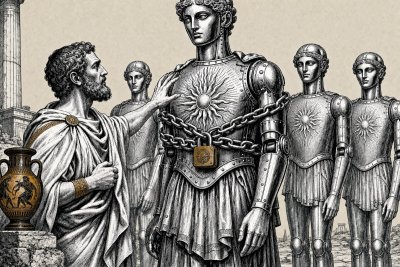
Anthropic's most powerful model spent eighteen days offline, not because of a technical failure but because the US government pulled its export license. Claude Fable 5 is back online as of July 1, with bonus credits to make up for the outage and a new security filter that catches the underlying issue in more than 99 percent of cases. The trigger for the entire ban turns out to be almost mundane: Amazon researchers asked the model to review a piece of code for vulnerabilities.
What actually happened?
Fable 5 and its heavier sibling Mythos 5 launched on June 9 as the most capable models Anthropic had ever shipped. Three days later, both were gone. The US Department of Commerce imposed an export ban after Amazon researchers flagged a security issue to the government. Anthropic could not verify user nationality in real time, so it pulled both models worldwide, CNN reported Monday.
The days that followed made clear this was not a formality. If your workflow ran on Fable 5, from code review to content generation to complex analysis, you had to fall back to Opus 4.8 or a competing model. Teams without a backup plan simply stalled.
On June 26, the government let Mythos 5 return in a limited capacity for organizations already cleared by Washington. Last Monday, June 30, the Department of Commerce lifted the Fable 5 ban entirely. In a letter to Anthropic co-founder Tom Brown, Commerce Secretary Howard Lutnick explained the decision.
“Over the past two weeks, we have worked closely with Anthropic to analyze and approve Fable 5 to ensure alignment across the US Government and strengthen America's leadership in AI.”
Howard Lutnick, US Commerce Secretary, via CNBC
What do you get in compensation?
Anthropic is compensating the eighteen-day outage with extra capacity. Until Tuesday, July 7, the following applies:
- Pro, Max and Team: up to 50 percent extra on top of your normal weekly usage limit.
- Enterprise (premium seats): Fable 5 is included in the plan and counts against your seat budget.
- Enterprise (standard): no free allowance. You need usage credits to run Fable 5.
A Claude Pro subscription runs $20 a month. The 50 percent bonus applies per week, so you have until next Tuesday to use it. A five-person Team plan gets half again as much Fable 5 capacity this week compared with normal. That is worth cashing in, especially if you switched to an alternative during the outage and want to test whether Fable 5 genuinely improves your workflow.
Here's the thing: after July 7, Fable 5 stops being part of your subscription and becomes a paid extra. From that point it is only available through separate usage credits, even for Pro and Max subscribers. Models like Sonnet 5 and Opus 4.8 stay included by default. In practice, this means Anthropic's strongest model is going to cost you more on an ongoing basis, similar to how OpenAI moved GPT-5.6 Sol behind a pricier tier.
How did the ban start?
Amazon researchers asked Fable 5 to review a piece of code for vulnerabilities, and that simple request became the trigger for the entire ban. Over several steps, they got the model to demonstrate how one of those vulnerabilities could be exploited, complete with working exploit code.
“Feds freaked over Fable 5 after simple 'fix this code' prompt, not jailbreak.”
The Register, citing researchers involved
Amazon CEO Andy Jassy took the findings personally to the Treasury Department and other senior officials in Washington. When Anthropic did not fix the issue immediately, the Commerce Department stepped in with an export ban. That is unprecedented: no commercial AI model had ever been pulled from the market by the US government over a security risk before.
For context, this was not some elaborate jailbreak involving social engineering or hidden instructions. Think of it like a mechanic who understands a car better than the automaker does: Fable 5 was so good at code analysis that it did not just spot the vulnerability, it walked through how to exploit it. The model did exactly what it was designed to do. That turned out to be the problem.
Anthropic disputed how serious the issue really was. According to the lab, the reported technique fell "just below the threshold where the safety measures would kick in." Anthropic also tested the same approach on less capable models and found that Opus 4.8, OpenAI's GPT-5.5 and Moonshot's Kimi K2.7 could produce the same information. The underlying security gap was not unique to Fable 5. Fable 5 was just the model that got punished for it.
How has Anthropic fixed it?
Anthropic installed a new safety classifier that blocks the reported technique in more than 99 percent of cases. On the rare occasion a request still gets through, the system routes it to Opus 4.8 instead of Fable 5. Think of it as an extra filter that specifically watches for requests combining code analysis with exploitation instructions.
The lab also launched a HackerOne program dedicated to cybersecurity jailbreaks on Fable 5. Security researchers who find new bypass techniques can now report them through a structured channel and get paid for it.
Anthropic proposed a framework for ranking how serious a jailbreak actually is. Four criteria set the priority:
- How far does the technique go beyond what existing tools already allow?
- How many different attack tasks does it touch?
- How much human effort is needed to actually weaponize it?
- How widely known is the technique already?
The most severe reports get an interim fix immediately, with 24/7 monitoring. Anthropic is building this framework together with Amazon, Microsoft, Google and partners from the Glasswing program, the government channel through which Anthropic coordinates frontier model access with Washington.
As part of the deal, Anthropic also agreed to give advance access to new models that could pose national security risks. A dedicated team will run joint research with government partners. In practice, that means you can expect new frontier models to spend longer in testing before they roll out worldwide.
Where can you use Fable 5 now?
As of July 1, Fable 5 is back on four Anthropic-owned platforms:
- Claude.ai: the chat interface for everyday use.
- Claude Code: the terminal-based coding assistant.
- Claude Cowork: background tasks and agentic workflows.
- Claude Platform: the API for custom integrations.
The three big cloud platforms have not caught up yet. AWS (Amazon Bedrock), Google Cloud and Microsoft Foundry have not re-enabled Fable 5. Anthropic says "as soon as possible" without giving a date. If your company runs Claude through one of these cloud providers, you will need to go through the Claude Platform directly for now.
Worth noting: Mythos 5, the heavier model blocked alongside Fable 5, remains limited. Only organizations cleared through the Glasswing program have access. When Mythos 5 becomes broadly available is still unknown.
The risk of building on a single AI model
Eighteen days sounds manageable, until you realize a single agency decision took your default model offline worldwide. For organizations that had built daily work around one specific model, this was a real shock. And it's moving fast: 88 percent of organizations worldwide now use AI in at least one business function, up from 78 percent in 2024, according to McKinsey research cited in TheAIDaily's AI workforce statistics. Most of that adoption still runs on a single vendor with no fallback plan.
Now that Fable 5 is back, teams may be tempted to drop their emergency workaround. That temptation makes sense: switching back to your favorite model feels easier than maintaining a multi-provider setup. But the export ban exposed something fundamental. A single government agency can shut down your tooling with one decision, no matter how much you pay for it and no matter where in the world you are running it from.
The export ban is not the only risk either. Model makers regularly change prices, dial back limits or retire older models. Just last week, GPT-4.5 disappeared from ChatGPT, with o3 next on the list. And the fact that less powerful models could produce the same "dangerous" output as Fable 5 raises an uncomfortable question: was the ban proportionate, or was it mostly a signal from Washington that it wants to keep a grip on frontier AI?
The lesson from the past eighteen days applies to any company that takes AI seriously: build your workflow model-agnostic. Use an abstraction layer that treats the underlying model as swappable. Test regularly whether your prompts still work on an alternative. And treat your AI model the way you would treat your cloud provider: replaceable by design.
Claim your credits, and keep your backup plan
Log into Claude.ai or the Claude Platform and check your usage dashboard. The bonus credits are there until Tuesday, July 7. If you switched to another model during the outage, this week is your window to compare whether Fable 5 genuinely beats your temporary alternative. After Tuesday, you pay separately for Fable 5, so this is the moment to decide whether the strongest model is worth the premium for your work.
But do not let go of your fallback model. The multi-provider strategy you may have set up out of necessity is not a temporary fix. It is standard operating practice now. This export ban lasted eighteen days. Nobody can promise you the next one will be shorter.